
Video Production Agreement Example
A video production agreement is a legally binding contract that outlines the terms and conditions for a video project between a client (the individual or organization commissioning the video) and a video production company or freelancer (the service provider). It serves as a roadmap for the project, protecting both parties by clearly defining responsibilities, deliverables, timelines, and payment schedules. Without a well-defined agreement, misunderstandings, disputes, and financial losses are much more likely.
While specific agreements can be tailored to individual projects, several key components are commonly included. Let’s examine some of the essential sections of a typical video production agreement:
1. Identification of Parties
This section clearly identifies the client and the video production company, including their full legal names and addresses. It’s crucial to use precise legal names, especially for businesses, as this ensures the correct entity is held accountable under the agreement.
2. Project Description
The heart of the agreement, this section provides a detailed description of the video project. It should include:
* **Video Title:** The working title of the video. * **Purpose:** The intended use of the video (e.g., marketing, training, internal communications). * **Target Audience:** Who the video is intended for. * **Length:** The approximate duration of the finished video. * **Style and Tone:** A brief description of the desired visual style, mood, and messaging. References to existing videos or style guides can be helpful. * **Deliverables:** A comprehensive list of everything the video production company will provide, such as raw footage, edited video files, audio files, graphics, and any other supplementary materials. Specify the file formats and resolution of the final deliverables. * **Revisions:** Outline the number of revision rounds included and the process for requesting and implementing changes. It’s important to define what constitutes a revision and any limitations on the scope of revisions (e.g., only minor changes, no re-shooting scenes).
The more specific and detailed this section is, the less room there is for ambiguity and potential disagreements later in the project.
3. Production Schedule and Timeline
This section lays out the key milestones and deadlines for the video production process. This includes:
* **Pre-production:** Dates for concept development, scriptwriting, storyboarding, location scouting, casting (if applicable), and pre-production meetings. * **Production (Shooting):** Dates and locations for filming. * **Post-production:** Dates for editing, sound design, music composition, color correction, and graphics integration. * **Delivery:** The final date for delivering the completed video to the client.
Including specific dates and milestones helps keep the project on track and provides a clear framework for managing expectations. A clause addressing potential delays due to unforeseen circumstances (e.g., weather, illness, technical issues) is also advisable, along with a process for adjusting the timeline if necessary.
4. Payment Terms
This section outlines the financial aspects of the agreement, including:
* **Total Project Cost:** The agreed-upon price for the entire video production project. * **Payment Schedule:** How the payments will be structured (e.g., a percentage upfront, milestone payments, final payment upon delivery). A common approach is to divide payments into thirds: one-third upfront, one-third upon completion of shooting, and one-third upon delivery of the final video. * **Payment Method:** How the client will make payments (e.g., check, wire transfer, credit card). * **Late Payment Fees:** The penalties for late payments, such as a percentage of the outstanding balance or a fixed fee. * **Expenses:** Clarify which expenses are included in the total project cost and which are billable separately (e.g., travel, permits, equipment rentals). A clear policy on expense reporting and approval is crucial.
5. Intellectual Property Rights
This section addresses ownership of the video footage, final product, and any underlying materials. It should specify:
* **Ownership of Raw Footage:** Who owns the raw footage captured during the shoot. Typically, the video production company owns the raw footage, but this can be negotiated. * **Copyright Ownership:** Who owns the copyright to the finished video. In many cases, the client owns the copyright, but the production company may retain certain rights, such as the right to use the video in their portfolio. * **Usage Rights:** How the client is permitted to use the video (e.g., online, television, internal presentations). Specifying the permitted uses and any restrictions is essential. * **Music Licensing:** Details about the music used in the video, including who is responsible for obtaining licenses and ensuring compliance with copyright laws. * **Talent Releases:** Confirmation that all talent featured in the video have signed release forms granting the client the right to use their likeness and performance.
6. Termination Clause
This section outlines the circumstances under which either party can terminate the agreement. It should include:
* **Reasons for Termination:** Common reasons include breach of contract, failure to meet deadlines, or changes in circumstances. * **Notice Period:** The amount of written notice required to terminate the agreement. * **Payment Upon Termination:** How payment will be handled if the agreement is terminated before completion. This may involve a pro-rated payment based on the work completed to date. * **Ownership of Work in Progress:** Who owns the work in progress if the agreement is terminated.
7. Confidentiality
This section protects confidential information shared between the client and the video production company. It ensures that both parties will keep sensitive information (e.g., business plans, marketing strategies) confidential and will not disclose it to third parties.
8. Indemnification
This section protects each party from liability for damages or losses caused by the other party’s actions or omissions. It typically states that each party will indemnify and hold harmless the other party from any claims, damages, or expenses arising from their respective negligence or breach of contract.
9. Governing Law and Dispute Resolution
This section specifies the jurisdiction whose laws will govern the agreement and the process for resolving any disputes. This may involve mediation, arbitration, or litigation.
10. Entire Agreement Clause
This clause states that the written agreement constitutes the entire agreement between the parties and supersedes any prior agreements or understandings, whether written or oral.
In conclusion, a comprehensive video production agreement is essential for a successful video project. By clearly defining the scope of work, responsibilities, timelines, and financial terms, it helps prevent misunderstandings and protects both the client and the video production company. It is always advisable to consult with legal counsel to review and customize the agreement to ensure it meets the specific needs of the project.
 770×1024 producer agreement fill printable fillable blank from production-agreement.pdffiller.com
  600×730 production agreement template template from enterstarcrypticcity.blogspot.com
 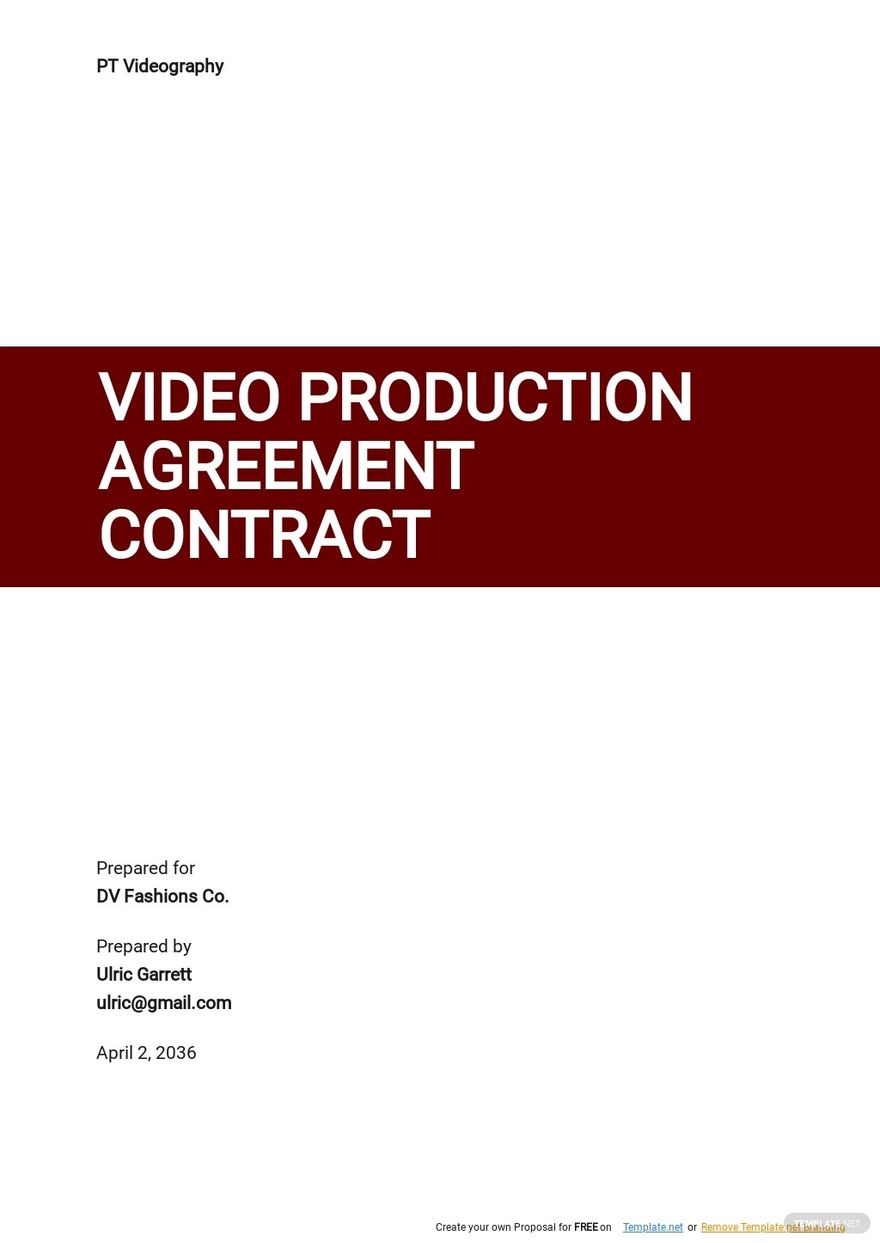 880×1243 video agreement template google docs word apple pages from www.template.net
  948×1226 video production contract template sampletemplatess sampletemplatess from www.sampletemplatess.com
 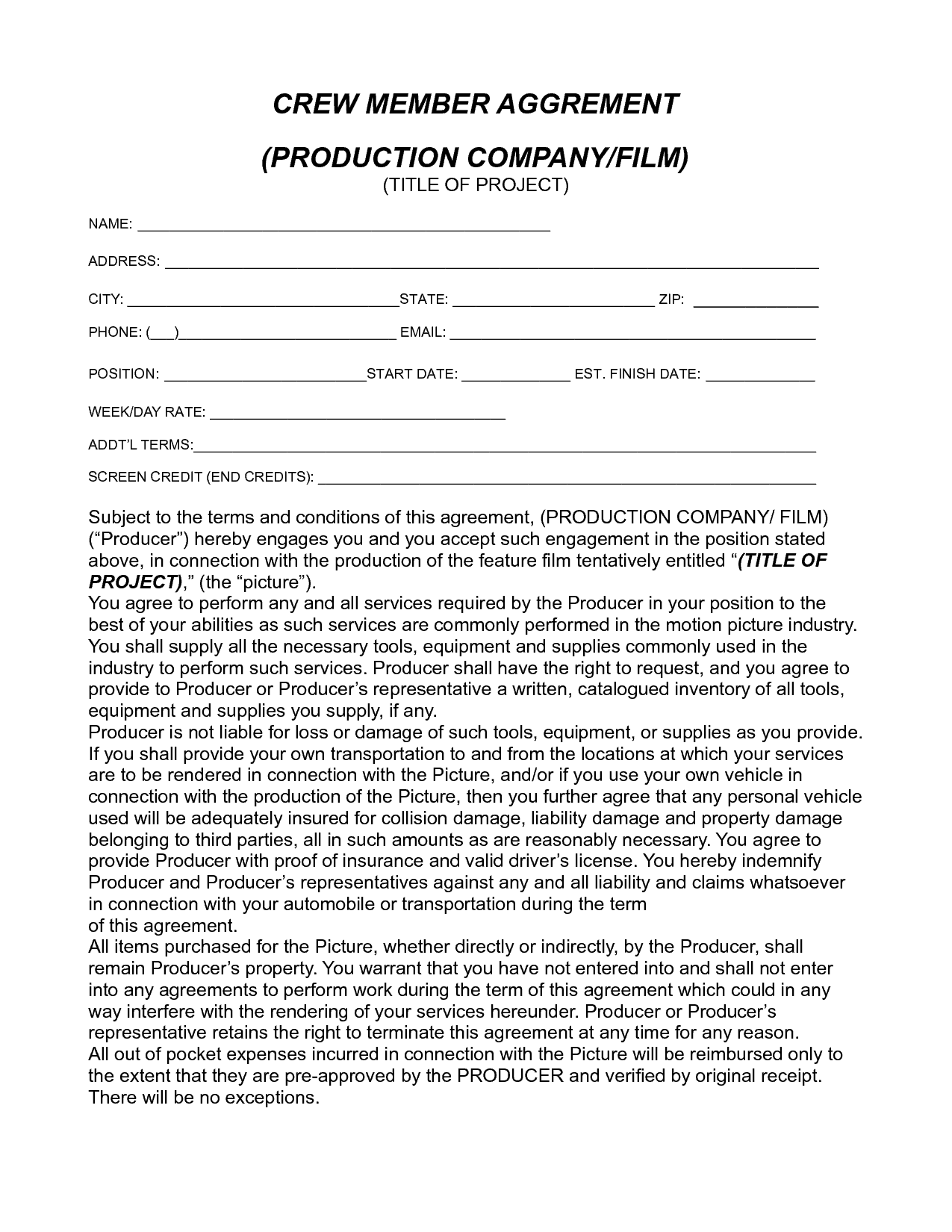 1275×1650 video production contracts find word templates from www.findwordtemplates.com
  474×613 video production agreement from studylib.net
474×613 video production agreement from studylib.net  575×709 video production contract video production agreement sample from rocketlawyer.com
  640×800 video production contract fillable printable forms handypdf from handypdf.com
  728×943 sample video production contract from www.formsbirds.com
  728×943 standard video production agreement from www.formsbirds.com
  1000×1290 film production agreement template from lesboucans.com
  728×943 production agreement template classles democracy from classlesdemocracy.blogspot.com
  728×943 video production contract template from www.formsbirds.com
  600×730 film production contract templates word from www.template.net
  1824×2040 video production agreement form from www.formsbirds.com
  768×1024 video production contract templates word excel from www.formsbirds.com
  600×730 production contract examples from www.examples.com
  768×1024 event production agreement template master template from ekdoseispelasgos.blogspot.com