
Waiver Of Liability Agreement Form USA
Waiver of Liability Agreement Form in the USA
A waiver of liability agreement, also known as a release of liability form, exculpatory agreement, or hold harmless agreement, is a legally binding contract in the United States. Its primary purpose is to protect an organization or individual from liability for injuries or damages that a participant may sustain while participating in an activity, using a service, or accessing a property. These forms are ubiquitous in various sectors, ranging from recreational sports and fitness centers to adventure tourism and even medical procedures. Understanding the nuances of these agreements is crucial for both the provider seeking protection and the participant relinquishing certain rights.
Key Components of a Waiver of Liability
While the specific wording and formatting can vary, a typical waiver of liability form in the USA generally includes the following key components:
- Identification of Parties: The waiver clearly identifies the organization or individual being protected (the releasee) and the participant agreeing to the waiver (the releasor). Accurate legal names and contact information are essential.
- Description of Activity or Service: The agreement provides a detailed description of the activity, service, or property access for which the waiver is being signed. This ensures that the participant understands the specific risks involved. Vague descriptions can weaken the enforceability of the waiver.
- Assumption of Risk: This critical section explicitly states that the participant acknowledges and understands the inherent risks associated with the activity or service. It lists potential dangers, injuries, and even death that could occur. The language used must be clear and understandable to a layperson.
- Release of Liability: This is the core of the waiver. It states that the participant voluntarily releases the releasee from any and all liability for injuries, damages, or losses, regardless of fault (within certain legal limitations, discussed later). The release typically covers negligence, but may not extend to gross negligence or intentional misconduct.
- Indemnification Clause (Optional): Some waivers include an indemnification clause, which requires the participant to indemnify (protect and compensate) the releasee for any claims made by third parties arising from the participant’s actions or participation. This shifts the burden of potential third-party lawsuits to the participant.
- Governing Law and Venue: The waiver specifies the state law that will govern the interpretation and enforcement of the agreement. It also designates the specific court or jurisdiction where any legal disputes will be resolved.
- Severability Clause: This clause ensures that if one part of the agreement is deemed unenforceable, the remaining provisions will still remain valid and binding.
- Signature and Date: The waiver must be signed and dated by the participant (or a parent/legal guardian for minors) to demonstrate their consent and understanding. Witnesses may be required depending on the jurisdiction or the nature of the activity.
Enforceability of Waivers
While waivers are intended to provide legal protection, their enforceability is not guaranteed and varies depending on state laws and the specific circumstances of the case. Courts generally scrutinize waivers carefully, and several factors can affect their validity:
- Clarity and Conspicuousness: The waiver must be written in clear, understandable language, avoiding legal jargon. It should be presented in a way that is easily noticeable and readable. Buried clauses or fine print can render the waiver unenforceable. The font size, layout, and overall presentation are considered.
- Scope of the Release: The release must clearly define the scope of the activities and risks covered. Overly broad or vague releases may be deemed unenforceable. The activities described should directly relate to the potential injuries.
- Negligence vs. Gross Negligence or Intentional Misconduct: Waivers typically protect against ordinary negligence (carelessness). However, they generally do not protect against gross negligence (reckless disregard for safety) or intentional misconduct (willful harm). Courts are less likely to enforce waivers that attempt to shield a party from liability for these more egregious acts.
- Unconscionability: A waiver may be deemed unconscionable if it is unfairly one-sided or oppressive, leaving the participant with no meaningful choice. This is more likely to occur when there is a significant power imbalance between the parties.
- Public Policy: Some states have laws or public policies that prohibit or restrict the use of waivers in certain contexts, such as essential services or activities involving children. For example, waivers may not be enforceable for certain types of medical treatment or for violations of safety regulations.
- Opportunity to Review: Participants must be given a reasonable opportunity to read and understand the waiver before signing it. Rushing the signing process or failing to provide adequate explanation can undermine its validity.
- Minors: The enforceability of waivers signed by parents or legal guardians on behalf of minors is a complex issue. Some states do not allow parents to waive a minor’s right to sue for negligence. Other states have specific rules regarding the types of activities for which such waivers are permissible.
State-Specific Laws
It is crucial to understand that the laws governing waivers of liability vary significantly from state to state in the USA. Some states are more lenient in enforcing waivers, while others have stricter requirements. Therefore, organizations and individuals should consult with legal counsel in their specific state to ensure that their waivers are compliant with local laws and regulations.
Best Practices for Creating and Using Waivers
To maximize the enforceability of a waiver of liability, consider the following best practices:
- Consult with an Attorney: Have an attorney draft or review the waiver to ensure it complies with applicable state laws and accurately reflects the risks involved.
- Use Clear and Concise Language: Avoid legal jargon and write in plain English that is easily understandable.
- Provide a Detailed Description of Risks: Be specific about the potential risks and hazards associated with the activity or service.
- Ensure Voluntary Consent: Give participants ample time to read and understand the waiver before signing it. Do not pressure them to sign quickly.
- Highlight Key Clauses: Use bolding, underlining, or other visual cues to draw attention to important clauses, such as the assumption of risk and release of liability.
- Maintain Accurate Records: Keep copies of all signed waivers in a secure location.
- Train Staff: Train staff members to properly explain the waiver to participants and answer any questions they may have.
- Review and Update Regularly: Review and update the waiver periodically to ensure it remains compliant with current laws and accurately reflects the activities and services offered.
In conclusion, a waiver of liability agreement is a valuable tool for protecting organizations and individuals from potential lawsuits. However, it is essential to understand the legal requirements and limitations surrounding these agreements and to implement best practices to maximize their enforceability. Consulting with legal counsel is highly recommended to ensure compliance with applicable state laws.
 1350×1671 liability waiver form editable forms from www.editableforms.com
 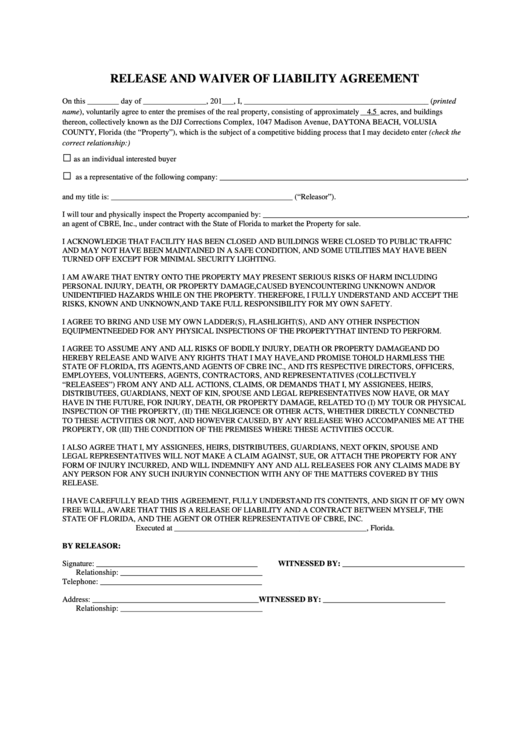 530×749 release waiver liability agreement form printable from www.formsbank.com
  638×826 printable release waiver liability agreement form generic from www.printablelegaldoc.com
  736×1014 general liability waiver form liability waiver general liability from www.pinterest.pt
  1932×2500 waiver liability form template collection from lesboucans.com
  2550×3300 waiver liability agreement printable documents from londonmedarb.com
  728×943 printable liability waiver form template form generic from www.printablelegaldoc.com
  736×952 printable liability release waiver form form generic from www.printablelegaldoc.com
  823×1058 waiver liability forms printable documents from londonmedarb.com
  618×800 liability waiver form template business from nationalgriefawarenessday.com