
Simple Sublease Agreement Contract USA
Simple Sublease Agreement Contract (USA)
A sublease agreement is a legally binding contract that allows a tenant to rent out their rented property to another party, known as the subtenant or sublessee. This is permissible as long as the original lease allows it and the landlord gives consent, if necessary. This document outlines the crucial aspects of a simple sublease agreement suitable for use in the United States.
Key Components of a Sublease Agreement
- Parties Involved:
- Sublessor: The original tenant who is subletting the property.
- Sublessee: The individual or entity renting the property from the sublessor.
- Landlord (Optional but Recommended): Including the landlord acknowledges their awareness and consent to the sublease arrangement.
- Property Description:
A clear and detailed description of the property being subleased. This should include the full address, apartment number (if applicable), and any specific areas included in the sublease (e.g., parking space, storage unit).
- Term of the Sublease:
Defines the start and end dates of the sublease agreement. It’s crucial this period falls within the original lease term. The sublease cannot extend beyond the original lease’s expiration date.
- Rent:
- Amount: The agreed-upon monthly rent the sublessee will pay to the sublessor.
- Payment Method: How the rent will be paid (e.g., check, electronic transfer, cash).
- Due Date: The specific date each month when the rent is due.
- Late Fees: The amount charged if rent is paid late and the grace period (if any). This should align with the original lease agreement to avoid conflicts.
- Security Deposit:
- Amount: The amount of money the sublessee pays to the sublessor as security against damages to the property. This amount should comply with local and state laws regarding security deposit limits.
- Return Conditions: Conditions under which the security deposit will be returned to the sublessee at the end of the sublease term, typically less any deductions for damages beyond normal wear and tear.
- Interest (if required): Some states require landlords (and by extension, sublessors) to pay interest on security deposits held for a certain period.
- Use of Property:
Specifies how the sublessee can use the property. This should align with the restrictions outlined in the original lease. For example, if the original lease prohibits operating a business from the property, the sublease should also prohibit it.
- Original Lease Agreement:
A clause stating that the sublease is subject to the terms and conditions of the original lease agreement. Include a statement that the sublessee has received and read a copy of the original lease. This ensures the sublessee is aware of all the rules and regulations governing the property.
- Maintenance and Repairs:
Clearly outlines who is responsible for maintenance and repairs. Generally, the sublessor remains responsible for fulfilling the obligations outlined in the original lease, but the sublease can specify how the sublessee should report maintenance issues and who will handle minor repairs.
- Utilities:
Specifies which utilities the sublessee is responsible for paying (e.g., electricity, gas, water, internet). If utilities are included in the rent, this should be explicitly stated.
- Default:
Defines what constitutes a default under the sublease agreement (e.g., failure to pay rent, violation of the lease terms). It should also outline the consequences of default, such as eviction proceedings.
- Landlord’s Consent (If Required):
A section confirming that the landlord has consented to the sublease. This may require the landlord’s signature as an acknowledgment.
- Governing Law:
Specifies the state law that governs the sublease agreement. This helps determine which jurisdiction’s laws will be applied if any disputes arise.
- Signatures:
The agreement must be signed and dated by both the sublessor and the sublessee. It’s recommended that signatures be notarized to provide added legal weight.
Important Considerations
- Landlord Approval: Always obtain written consent from the landlord before subletting. Failure to do so can result in eviction and breach of the original lease.
- Credit Check and Screening: It’s wise for the sublessor to perform a credit check and screen potential sublessees to ensure they are reliable and financially responsible.
- Inventory Checklist: Create a detailed inventory checklist documenting the condition of the property and any existing furnishings before the sublessee moves in. This can help prevent disputes regarding damages later on.
- Insurance: The sublessor should confirm their renter’s insurance policy covers subletting scenarios. The sublessee should also obtain their own renter’s insurance to protect their personal belongings.
- State and Local Laws: Research and comply with all applicable state and local laws regarding subletting, including rent control ordinances and security deposit regulations.
- Liability: Remember that the original tenant (sublessor) remains ultimately responsible for the property and for fulfilling the terms of the original lease agreement. Any damages caused by the sublessee or violations of the lease will be the sublessor’s responsibility to address with the landlord.
Disclaimer
This information is for general guidance only and does not constitute legal advice. You should consult with an attorney to ensure your sublease agreement complies with all applicable laws and meets your specific needs.
 1583×2048 sublease agreement template word rtf from leaseagreements.com
  600×670 sample sublease agreement templates google docs ms word from www.sampletemplates.com
  532×552 sublease agreement template word from www.wonder.legal
  834×1080 sublease agreement templates from signaturely.com
  600×670 sublease agreement template agreement templates from www.agreementstemplates.org
  1275×1650 sublease agreement sample printable documents from londonmedarb.com
  2550×3300 sublease agreement template from wordtemplate.net
  793×1122 sublease agreement simple template hq printable documents from whoamuu.blogspot.com
 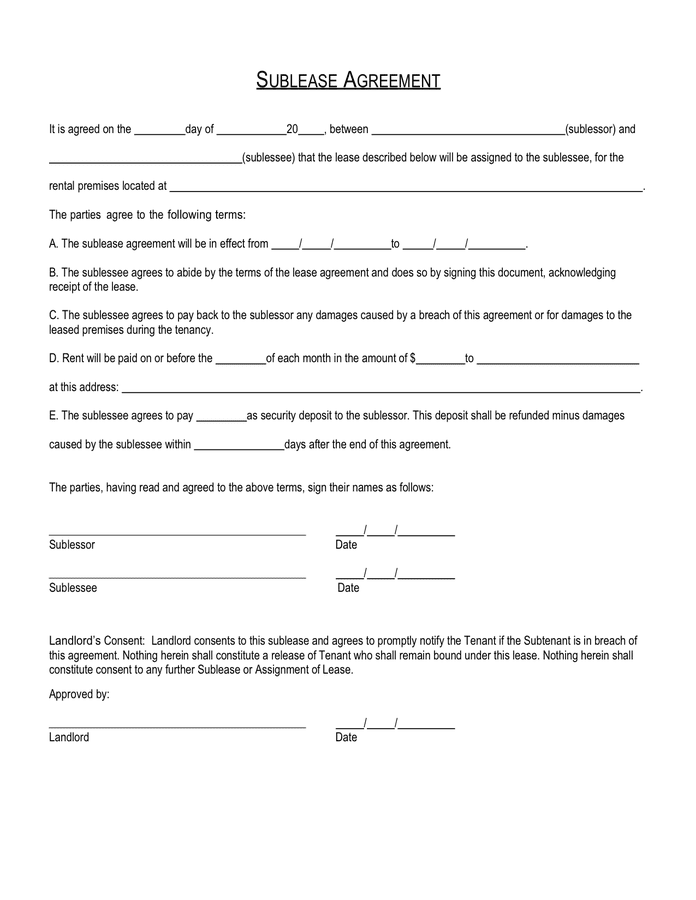 696×900 sublease agreement documents word excel from www.dexform.com
 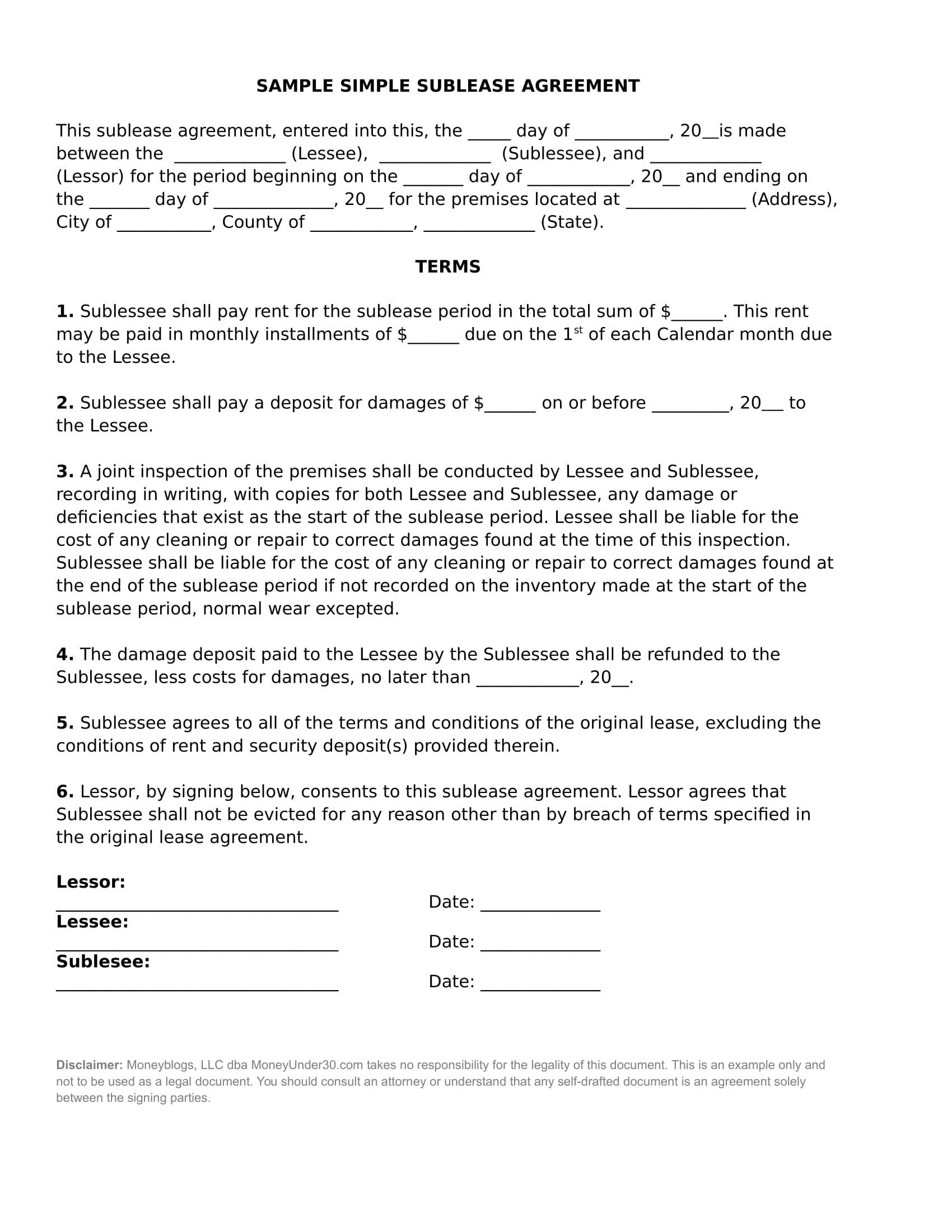 1700×2200 sublease agreement examples from www.examples.com
  800×1039 sublease agreement templates commercial residential from www.wordtemplatesonline.net