
Artist Commission Agreement Pdf
Artist Commission Agreement PDF Explained An Artist Commission Agreement is a crucial document for any artist undertaking commissioned work. This PDF agreement outlines the terms and conditions between the artist (the commissioner) and the client (the commissioning party). It serves as a legally binding contract, protecting both parties’ interests and ensuring a clear understanding of the project scope, payment schedule, ownership rights, and other critical aspects. A well-drafted agreement prevents misunderstandings, minimizes potential disputes, and allows artists to focus on creating their best work with confidence. Let’s break down the typical sections found in an Artist Commission Agreement PDF: **1. Identification of Parties:** The agreement begins by clearly identifying both the artist and the client. This section includes their full legal names and contact information (addresses, phone numbers, email addresses). Accuracy here is vital as it establishes the legal entities bound by the contract. **2. Description of the Commissioned Work:** This is perhaps the most important section, as it details exactly what the artist is being commissioned to create. The description should be specific and comprehensive, leaving no room for ambiguity. Consider including: * **Subject Matter:** What is the subject of the artwork? (e.g., a portrait of a pet, a landscape scene, an abstract design) * **Dimensions/Size:** Specify the exact dimensions (height, width, depth) of the finished artwork. * **Medium:** Identify the materials the artist will use (e.g., oil on canvas, digital painting, sculpture in bronze). * **Style:** Describe the desired artistic style (e.g., realistic, impressionistic, abstract, cartoon). It might be helpful to reference the artist’s existing work or provide examples of the desired style. * **Specific Requirements:** Include any other specific requirements, such as color palette, composition, specific elements to be included, or any other artistic direction provided by the client. * **References:** If applicable, mention any reference images or materials provided by the client to guide the artist. Clearly state who owns the copyright of these references and how they can be used. **3. Creation Process & Approvals:** This section outlines the steps involved in the creation process and the opportunities for the client to provide feedback and approval. It might include: * **Sketch/Preliminary Design:** Specify whether the artist will create a sketch or preliminary design for the client’s approval before proceeding with the final artwork. * **Progress Updates:** Indicate how often the artist will provide progress updates to the client (e.g., weekly emails with photos). * **Client Feedback:** Describe the process for providing feedback and revisions. Specify the number of revisions included in the agreed-upon price and the cost of any additional revisions. * **Approval Milestones:** Outline specific milestones where the client’s approval is required before the artist can proceed to the next stage. (e.g., approval of the sketch, approval of the color palette). * **Artistic License:** Define the extent of the artist’s artistic license. While the client provides guidance, the artist ultimately has the creative freedom to execute the work within the agreed parameters. **4. Timeline & Delivery:** This section establishes a clear timeline for the completion and delivery of the artwork. This includes: * **Start Date:** The date when the artist will begin working on the commission. * **Estimated Completion Date:** The date when the artist expects to complete the artwork. * **Delivery Date:** The date when the artwork will be delivered to the client. * **Delivery Method:** Specify how the artwork will be delivered (e.g., in person, via courier, digitally). * **Shipping Costs:** Clarify who is responsible for covering shipping costs and insurance. * **Delays:** Address potential delays and the process for communicating any delays to the client. It’s a good idea to include a clause addressing unforeseen circumstances that may affect the timeline. **5. Price & Payment:** This section details the agreed-upon price for the commissioned artwork and the payment schedule. * **Total Price:** Clearly state the total price for the commission. * **Payment Schedule:** Specify the payment schedule (e.g., 50% upfront deposit, 25% upon completion of the sketch, 25% upon final delivery). * **Payment Method:** Indicate the accepted methods of payment (e.g., cash, check, credit card, online payment platforms). * **Late Payment Fee:** Include a clause outlining any late payment fees if the client fails to make payments on time. * **Expenses:** Clarify if any expenses (e.g., materials, travel) are included in the price or if they will be billed separately. **6. Ownership & Copyright:** This section defines the ownership of the artwork and the copyright. * **Copyright Ownership:** Generally, the artist retains the copyright to the artwork, even after it is sold. This means the artist retains the right to reproduce the artwork, create derivative works, and display it publicly. * **Transfer of Ownership:** Specify whether the client is purchasing the physical artwork itself or also acquiring any rights to reproduce the artwork. * **Usage Rights:** Clearly outline how the client is allowed to use the artwork (e.g., personal use, commercial use, online display). * **Attribution:** Stipulate whether the artist will be credited when the artwork is displayed or reproduced. **7. Cancellation & Termination:** This section outlines the conditions under which either party can cancel the agreement. * **Cancellation by Client:** Specify the process for the client to cancel the commission and any cancellation fees that may apply. * **Cancellation by Artist:** Outline the circumstances under which the artist can cancel the commission. * **Refund Policy:** Detail the refund policy in case of cancellation by either party. Usually, the artist retains a portion of the deposit to cover their time and expenses. * **Force Majeure:** Include a clause addressing unforeseen events (e.g., illness, natural disaster) that may prevent the artist from completing the commission. **8. Warranty & Liability:** This section addresses any warranties regarding the artwork and limitations of liability. * **Warranty of Originality:** The artist warrants that the artwork is original and does not infringe on any third-party copyrights. * **Limitations of Liability:** Limit the artist’s liability for any damages or losses arising from the commission. **9. Dispute Resolution:** This section outlines the process for resolving any disputes that may arise between the artist and the client. * **Mediation:** Suggest mediation as a first step in resolving disputes. * **Arbitration:** Consider arbitration as an alternative to litigation. * **Governing Law:** Specify the governing law that will be used to interpret the agreement. **10. Entire Agreement:** This clause states that the agreement constitutes the entire understanding between the parties and supersedes any prior agreements or discussions. **11. Severability:** This clause states that if any provision of the agreement is deemed invalid or unenforceable, the remaining provisions will remain in full force and effect. **12. Signatures:** The agreement should be signed and dated by both the artist and the client, indicating their agreement to the terms and conditions outlined in the document. Printed names underneath the signatures are highly recommended. By carefully considering each of these sections and tailoring the agreement to the specific circumstances of the commission, artists and clients can create a solid foundation for a successful and mutually beneficial working relationship. It’s always advisable to seek legal counsel to review the agreement and ensure it adequately protects your interests.
 585×610 template commission artist agreement hq printable documents from whoamuu.blogspot.com
  1200×840 artist commission contract template word apple pages from www.besttemplates.com
  390×505 artist agreement examples from www.examples.com
 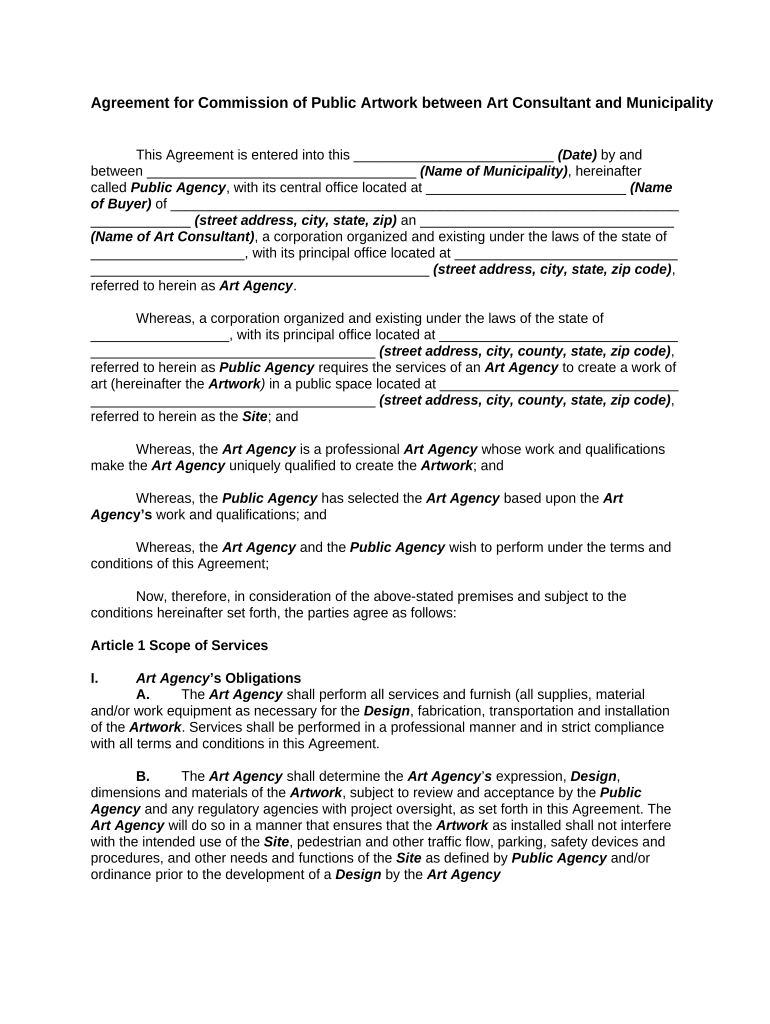 770×1024 agreement commission art template pdffiller from www.pdffiller.com
  320×455 sample artist agreements ms word from www.sample.net
  1700×2200 commission agreement contract form samples ms word from www.sampleforms.com
  474×543 artist commission contract template flyer template from aflyertemplate.blogspot.com