
Free Project Budget Estimator Template In Excel
Okay, here’s an HTML-formatted piece about free project budget estimator templates in Excel, aiming for around 1000 words: “`html
Free Project Budget Estimator Templates in Excel: A Comprehensive Guide
Accurately estimating project costs is crucial for success. A well-defined budget provides a roadmap for resource allocation, helps track expenses, and ensures projects are completed within financial constraints. While sophisticated project management software offers robust budgeting features, Microsoft Excel remains a versatile and accessible tool, especially for smaller projects or initial budget planning. Fortunately, numerous free project budget estimator templates are available for Excel, providing a starting point for creating a customized budget tailored to your specific needs.
Why Use a Project Budget Estimator Template?
Leveraging a pre-designed template offers several advantages:
- Saves Time and Effort: Instead of building a budget from scratch, a template provides a pre-formatted structure with formulas and calculations already in place. This drastically reduces the time spent on initial setup.
- Ensures Consistency: Templates enforce a consistent budgeting process, ensuring all projects adhere to the same standards for cost estimation and tracking.
- Reduces Errors: Pre-built formulas minimize the risk of manual calculation errors, leading to more accurate budget predictions.
- Provides a Starting Point for Customization: Templates are not meant to be rigid. They act as a foundation that you can adapt and modify to fit the unique requirements of your project.
- Improves Collaboration: A standardized template facilitates collaboration among team members, as everyone is working with the same format and understanding of the budget.
Key Components of a Good Project Budget Estimator Template
While specific features may vary, a robust project budget estimator template should include the following core components:
- Project Scope Definition: A clear description of the project’s objectives, deliverables, and boundaries. This helps define the scope of work and identify all necessary tasks.
- Work Breakdown Structure (WBS): A hierarchical breakdown of the project into smaller, manageable tasks. This allows for more accurate cost estimation at the task level.
- Cost Categories: Clearly defined cost categories, such as labor, materials, equipment, travel, and overhead. This ensures all expenses are accounted for.
- Resource Allocation: Identification of the resources required for each task, including personnel, equipment, and materials.
- Cost Estimation Methods: Options for selecting appropriate cost estimation methods, such as analogous estimating, parametric estimating, or bottom-up estimating.
- Cost Breakdown: A detailed breakdown of costs for each task, including labor hours, material quantities, and equipment rental fees.
- Indirect Costs: Inclusion of indirect costs, such as overhead, administrative expenses, and contingency reserves.
- Contingency Planning: A provision for contingency funds to cover unforeseen expenses or risks. A common practice is to allocate a percentage of the total budget to contingency (e.g., 5-10%).
- Budget Summary: A summary of the total project budget, broken down by cost category and task.
- Variance Analysis: A mechanism for tracking actual costs against the planned budget and identifying variances. This allows for early detection of potential cost overruns.
- Reporting: Features for generating reports on budget performance, including cost summaries, variance reports, and trend analysis.
- Assumptions and Constraints: A section to document the assumptions and constraints that underpin the budget, such as resource availability, market conditions, and regulatory requirements.
Types of Free Project Budget Estimator Templates Available
Numerous free Excel templates cater to different project types and industries. Here are some common types:
- Simple Project Budget Templates: These templates are ideal for small projects with limited complexity. They typically include basic cost categories and simple calculations.
- Construction Project Budget Templates: Designed for construction projects, these templates include cost categories specific to the construction industry, such as materials, labor, permits, and subcontractors.
- IT Project Budget Templates: These templates focus on the cost associated with IT projects, including software development, hardware procurement, and network infrastructure.
- Event Planning Budget Templates: Tailored for event planning, these templates include cost categories such as venue rental, catering, entertainment, and marketing.
- Marketing Campaign Budget Templates: These templates are designed to estimate the cost of marketing campaigns, including advertising, public relations, and content creation.
- Software Development Budget Templates: More granular than general IT project templates, these detail the costs of specific software development lifecycle phases, coding, testing and deployment.
Finding and Downloading Free Templates
Several online resources offer free project budget estimator templates for Excel:
- Microsoft Office Templates: Microsoft offers a variety of free templates directly through Excel’s built-in template library. Access this by selecting “File” -> “New” and searching for “project budget.”
- Project Management Websites: Websites dedicated to project management often provide free templates and resources. Examples include ProjectManager.com, Smartsheet.com, and Template.net.
- Spreadsheet Template Websites: Several websites specialize in providing free spreadsheet templates for various purposes. Examples include Vertex42.com and Spreadsheet123.com.
- Business and Finance Websites: Many business and finance websites offer free templates as a lead magnet or promotional tool.
When downloading templates, exercise caution and ensure you are downloading from reputable sources to avoid malware or viruses. Always scan downloaded files with antivirus software.
Customizing Your Project Budget Estimator Template
Once you’ve downloaded a template, it’s crucial to customize it to fit your specific project requirements. Here are some tips for customization:
- Define Project Scope Clearly: Start by defining the project’s scope and objectives in detail. This will help you identify all the necessary tasks and resources.
- Develop a Work Breakdown Structure (WBS): Create a WBS to break down the project into smaller, manageable tasks. This will make it easier to estimate costs accurately.
- Add or Remove Cost Categories: Add or remove cost categories to match the specific types of expenses associated with your project.
- Adjust Formulas and Calculations: Modify formulas and calculations to reflect the specific pricing and cost structures relevant to your industry and region.
- Incorporate Historical Data: If available, incorporate historical data from previous projects to improve the accuracy of your cost estimates.
- Consider Inflation and Market Fluctuations: Factor in potential inflation and market fluctuations when estimating costs, especially for projects with long timelines.
- Add Contingency: Allocate a contingency reserve to cover unforeseen expenses or risks. The amount of contingency should be based on the project’s complexity and risk profile.
- Test the Template: Thoroughly test the template to ensure that all formulas and calculations are working correctly.
- Add Visualizations: Incorporate charts and graphs to visualize budget data and track progress.
Best Practices for Project Budgeting
Beyond using a template, following best practices will enhance the effectiveness of your budgeting process:
- Involve Stakeholders: Engage key stakeholders in the budgeting process to gather input and ensure buy-in.
- Use Realistic Estimates: Avoid overly optimistic or pessimistic estimates. Strive for realistic and data-driven projections.
- Regularly Monitor and Update the Budget: Track actual costs against the planned budget and update the budget regularly to reflect changes in project scope or market conditions.
- Document Assumptions and Constraints: Clearly document all assumptions and constraints that underpin the budget.
- Communicate Budget Changes: Communicate any significant budget changes to stakeholders promptly.
- Learn from Past Projects: Analyze past project budgets to identify areas for improvement and refine your cost estimation techniques.
Conclusion
Free project budget estimator templates in Excel provide a valuable starting point for creating a comprehensive and accurate budget. By selecting the right template, customizing it to your specific needs, and following best practices for project budgeting, you can effectively manage project costs, minimize risks, and increase the likelihood of project success. Remember that the template is a tool; its effectiveness hinges on the quality of data you input and your commitment to ongoing monitoring and adjustments.
“`
 1024×619 project budget template excel excel project budget template from myexceltemplates.com
  900×589 project budget template excel excelxocom from excelxo.com
  791×892 project budget template excel excel templates from www.exceltemplate123.us
  600×730 excel project template excel documents from www.template.net
 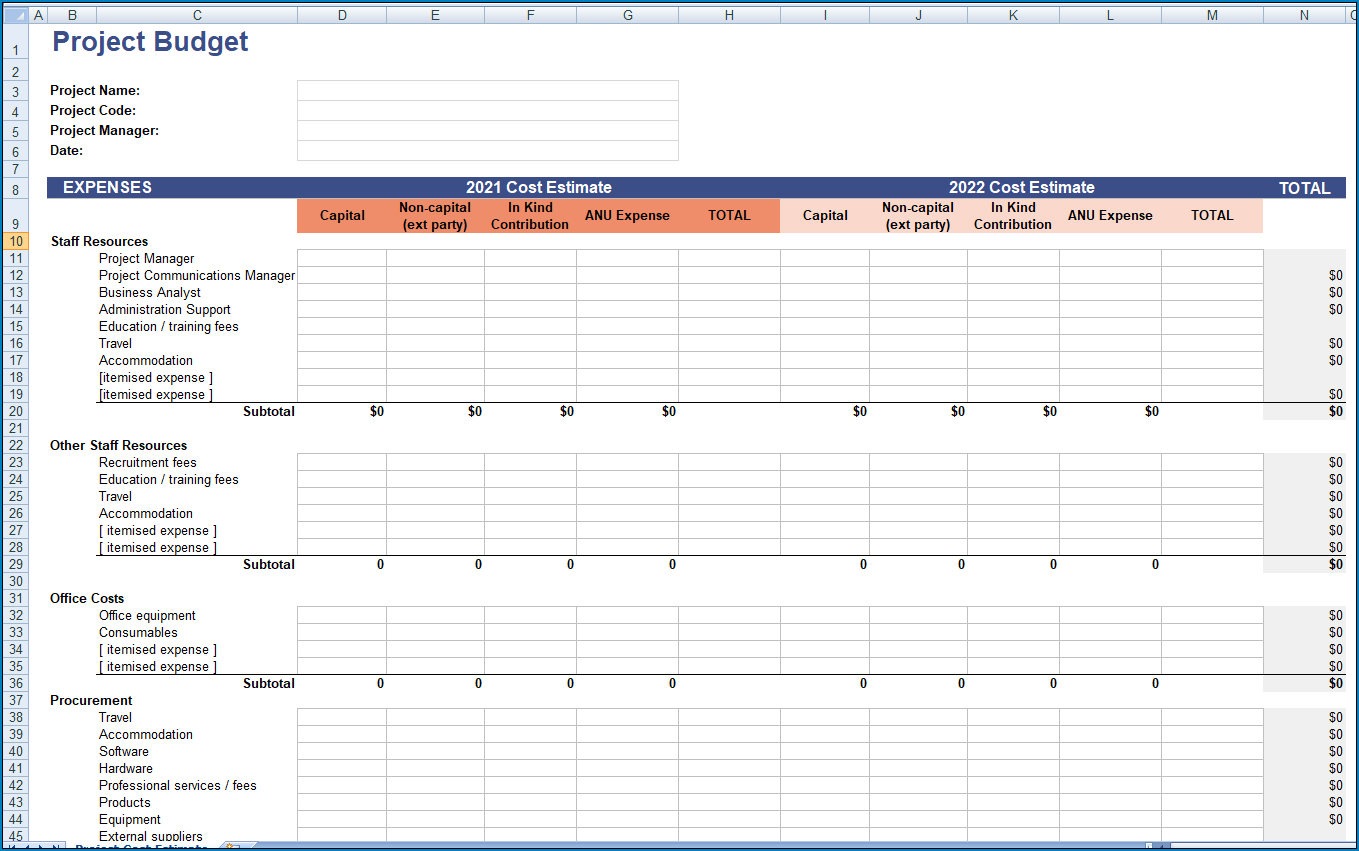 1359×851 printable project budget template excel from www.templateral.com
  800×418 project budget excel template exceldatapro from exceldatapro.com
  1509×858 project budgeting template excel templates from www.excel-templates.net
  1600×603 project budgeting excel template from www.engineeringmanagement.info