
College Memo Template For Announcements
College Memo Template for Announcements: A Comprehensive Guide
Effective communication is the lifeblood of any successful college or university. Whether it’s announcing policy changes, upcoming events, departmental updates, or celebrating student achievements, a well-structured memo ensures that information reaches the intended audience in a clear, concise, and professional manner. This guide will explore the elements of a robust college memo template designed specifically for making important announcements.
The Importance of a Standardized Memo Template
Using a standardized memo template provides several key advantages for college-wide announcements:
* **Consistency:** A consistent format across all memos helps establish a professional image for the institution and makes it easier for recipients to quickly locate and understand the key information. * **Clarity:** A well-designed template encourages clarity by prompting memo creators to include essential details in a logical order. This reduces ambiguity and minimizes the likelihood of misinterpretations. * **Efficiency:** Templates streamline the memo creation process, saving time and effort for both the sender and the recipient. The pre-defined structure eliminates the need to repeatedly format basic information. * **Branding:** A memo template can incorporate the college’s official logo, colors, and fonts, reinforcing the institution’s brand identity and creating a sense of unity. * **Accessibility:** Standardized templates can be designed with accessibility in mind, ensuring that individuals with disabilities can easily access and understand the information.
Key Components of a College Memo Template
Here’s a breakdown of the essential elements that should be included in a college memo template for announcements:
1. Heading
* **College Name/Logo:** Clearly display the official name and/or logo of the college at the top of the memo. This immediately identifies the source of the information. * **MEMORANDUM (or MEMO):** Prominently display the word “MEMORANDUM” or “MEMO” to clearly indicate the document’s purpose. * **Date:** Include the date the memo was issued. This is crucial for record-keeping and context. * **To:** Specify the recipient(s) of the memo. This can be a specific individual, a department, a group of students, or the entire college community. Be as precise as possible. Use titles and departments for clarity (e.g., “To: Dr. Jane Doe, Department Chair, Biology Department”). If addressing multiple recipients, consider using a distribution list or a general designation (e.g., “To: All Faculty and Staff”). * **From:** Indicate the sender of the memo, including their name, title, and department. This ensures accountability and allows recipients to contact the sender for clarification if needed. * **Subject:** Provide a concise and informative subject line that clearly summarizes the memo’s content. This is arguably the most important element, as it determines whether the recipient will open and read the memo. Be specific and action-oriented (e.g., “Subject: Upcoming Policy Change Regarding Student Registration,” “Subject: Announcement: Fall Semester Orientation Dates,” “Subject: Congratulations to Professor Smith on Research Grant Award”).
2. Body
* **Introduction:** Begin with a brief and direct introductory paragraph that states the purpose of the memo. Clearly state what the announcement is about in the first sentence or two. * **Explanation/Details:** Provide a detailed explanation of the announcement. This section should include all relevant information, such as dates, times, locations, policies, procedures, and contact information. Organize the information logically and use clear and concise language. * **Supporting Information (Optional):** If necessary, include supporting information such as data, statistics, research findings, or relevant background information. This can be presented in the form of bullet points, tables, charts, or graphs. * **Call to Action (If Applicable):** If the announcement requires recipients to take specific action (e.g., attend a meeting, submit a form, update their records), clearly state what action is required and the deadline for completion. * **Contact Information:** Provide contact information (phone number, email address, website) for individuals or departments who can answer questions related to the announcement.
3. Closing
* **Concluding Statement:** End with a brief concluding statement that reinforces the importance of the announcement and expresses appreciation for the recipient’s attention. * **Sincerely/Regards/Respectfully:** Use a professional closing salutation. * **Signature (Optional):** If the memo is being distributed in hard copy, the sender should sign their name above their typed name and title. * **Attachments (If Applicable):** If the memo includes attachments, clearly indicate the number and type of attachments (e.g., “Attachment: Policy Document”). * **Distribution List (If Applicable):** If the memo is being distributed to a large group, a distribution list can be included at the end to ensure that everyone receives it.
Formatting Guidelines
* **Font:** Use a clear and readable font such as Times New Roman, Arial, or Calibri in a size between 10 and 12 points. * **Margins:** Use standard 1-inch margins on all sides. * **Spacing:** Use single spacing within paragraphs and double spacing between paragraphs. * **Headings and Subheadings:** Use headings and subheadings to organize the information and make it easier to read. Use boldface or underlining to highlight headings. * **White Space:** Use white space effectively to create a visually appealing and easy-to-read document. * **Proofread Carefully:** Always proofread the memo carefully for errors in grammar, spelling, and punctuation before distributing it.
Example Snippets for Different Announcement Types
* **Policy Change:** “This memo announces a revised policy regarding student attendance, effective [Date]. The revised policy can be found in its entirety on the university website at [Website Address].” * **Event Announcement:** “You are invited to attend the annual Faculty Research Symposium on [Date] at [Time] in [Location]. Keynote speaker Dr. [Name] will be presenting on [Topic]. RSVP by [Date] to [Email Address].” * **Departmental Update:** “The [Department Name] is pleased to announce the launch of its new website. Visit [Website Address] to learn more about our programs, faculty, and research.” * **Student Achievement:** “Congratulations to [Student Name] on receiving the prestigious [Award Name]. [He/She/They] will be recognized at a ceremony on [Date] at [Time] in [Location].”
Conclusion
A well-designed college memo template is an invaluable tool for ensuring effective communication across the institution. By following the guidelines outlined in this guide, colleges and universities can create memos that are clear, concise, professional, and informative, ultimately fostering a more informed and engaged campus community. Regularly review and update the template to ensure it meets the evolving needs of the institution.
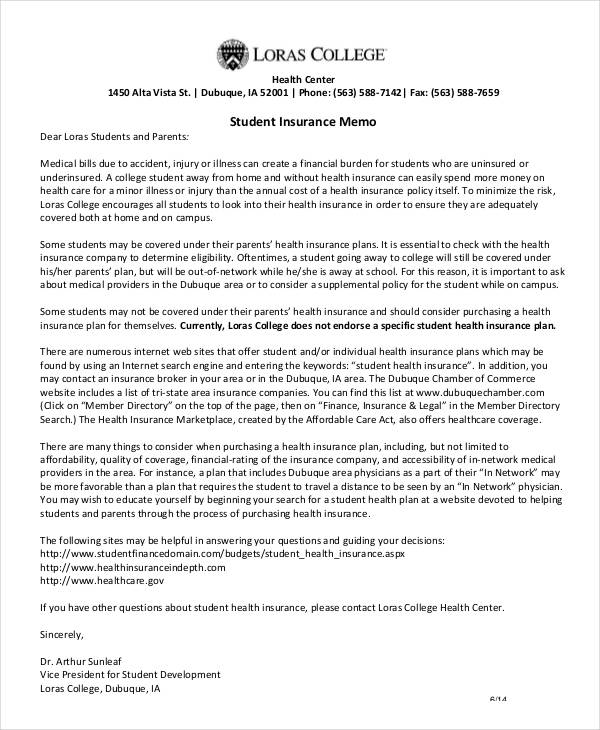 600×730 student memo examples from www.examples.com
  440×570 memo record template template from enterstarcrypticcity.blogspot.com
  2550×3509 memo office university registrar from our.upcebu.edu.ph
  791×1024 announcement memo from studylib.net
  600×550 sample memo meeting announcement document template from noellawee.blogspot.com