
Coach And Client Agreement Form
Coach and Client Agreement Form: A Comprehensive Guide
A coach and client agreement form, also known as a coaching contract, is a vital document that establishes a clear understanding and mutual commitment between a coach and their client. It outlines the terms of the coaching relationship, protecting both parties and ensuring a professional and productive engagement. This detailed guide explores the essential components of a comprehensive coach and client agreement form.
Why is a Coaching Agreement Important?
- Sets Expectations: Clearly defines the roles, responsibilities, and expectations of both the coach and the client.
- Provides Clarity: Eliminates ambiguity regarding the scope of coaching, session frequency, fees, cancellation policies, and confidentiality.
- Protects Both Parties: Serves as a legally binding document that protects the interests of both the coach and the client in case of disputes or misunderstandings.
- Enhances Professionalism: Establishes a professional framework for the coaching relationship, fostering trust and respect.
- Facilitates Goal Achievement: By clearly defining goals and expectations, the agreement helps the client stay focused and committed to the coaching process, ultimately increasing the likelihood of achieving desired outcomes.
Key Elements of a Coach and Client Agreement Form
A well-structured coaching agreement form should include the following key elements:
1. Identification of Parties
This section clearly identifies the coach and the client by their full legal names and contact information (address, phone number, email address). This establishes a clear understanding of who is involved in the agreement.
2. Description of Coaching Services
This section details the specific coaching services being offered. It should clearly articulate the type of coaching (e.g., life coaching, executive coaching, career coaching), the focus areas, and the methodologies or techniques the coach will utilize. It’s crucial to be specific and avoid vague language. For example, instead of stating “providing life coaching,” specify “assisting the client in identifying and achieving personal goals related to career, relationships, and personal development.”
3. Coaching Session Details
This section outlines the logistics of the coaching sessions, including:
- Session Length: Specify the duration of each coaching session (e.g., 60 minutes, 90 minutes).
- Frequency: Define how often the sessions will occur (e.g., weekly, bi-weekly, monthly).
- Location/Mode of Delivery: State whether the sessions will be conducted in person, over the phone, or via video conferencing. If in person, specify the location.
- Scheduling: Outline the process for scheduling and rescheduling sessions, including any notice periods required.
4. Fees and Payment Terms
This section is crucial for transparency and avoiding financial misunderstandings. It should clearly state:
- Coaching Fees: Specify the fee per session or the total cost of the coaching package.
- Payment Schedule: Define when payments are due (e.g., before each session, at the beginning of the month, upon completion of the package).
- Payment Methods: List the accepted methods of payment (e.g., credit card, check, online payment platforms).
- Late Payment Policy: Outline any penalties or consequences for late payments.
- Refund Policy: Clearly state the refund policy, if any, in case the client terminates the coaching engagement.
5. Cancellation Policy
This section outlines the procedures and consequences for canceling or rescheduling coaching sessions. It should specify:
- Notice Period: How much advance notice is required for canceling or rescheduling a session (e.g., 24 hours, 48 hours).
- Cancellation Fees: Whether a fee will be charged for sessions canceled with less than the required notice.
- Coach Cancellation: Outline the coach’s policy in case they need to cancel or reschedule a session.
6. Confidentiality
This section is essential for building trust and ensuring the client feels safe sharing personal information. It should explicitly state that all information shared by the client during coaching sessions will be kept strictly confidential. It should also outline any exceptions to confidentiality, such as legal requirements to disclose information (e.g., mandated reporting of child abuse or threats of violence). Adherence to relevant privacy laws, like HIPAA if applicable, should also be mentioned.
7. Termination Clause
This section outlines the conditions under which either the coach or the client can terminate the coaching agreement. It should specify:
- Notice Period: The amount of notice required for termination (e.g., two weeks, one month).
- Reasons for Termination: While it’s generally not necessary to specify reasons for termination, the agreement can state that either party can terminate the agreement at any time with the required notice.
- Outstanding Fees: A statement regarding the payment of any outstanding fees upon termination.
8. Disclaimer
A disclaimer clarifies the nature of the coaching relationship and what it is not. This section should state that the coach is not a therapist, counselor, or medical professional and that coaching is not a substitute for therapy or medical treatment. It should also emphasize that the client is ultimately responsible for their own choices and actions.
9. Governing Law
This section specifies the state or jurisdiction whose laws will govern the interpretation and enforcement of the agreement.
10. Entire Agreement
This clause states that the written agreement constitutes the entire understanding between the coach and the client and supersedes any prior oral or written agreements or representations.
11. Signature and Date
The agreement must be signed and dated by both the coach and the client to indicate their acceptance of the terms and conditions. It’s recommended that both parties keep a copy of the signed agreement.
Tips for Creating a Strong Coaching Agreement
- Use Clear and Concise Language: Avoid jargon or technical terms that the client may not understand.
- Be Specific: Provide as much detail as possible to avoid ambiguity.
- Seek Legal Advice: Consider having an attorney review the agreement to ensure it is legally sound and protects your interests.
- Tailor the Agreement: Customize the agreement to fit the specific needs of your coaching practice and the client.
- Discuss the Agreement Thoroughly: Review the agreement with the client and answer any questions they may have before they sign it.
By carefully crafting a comprehensive coach and client agreement form, you can establish a strong foundation for a successful and rewarding coaching relationship, fostering trust, clarity, and mutual commitment.
 768×994 usa badminton coach agreement world championship from studylib.net
768×994 usa badminton coach agreement world championship from studylib.net  600×730 coaching agreement coach contract template hq template documents from anthopofagos.blogspot.com
  500×647 coaching agreement contract template sample coaching tools from thecoachingtoolscompany.com
 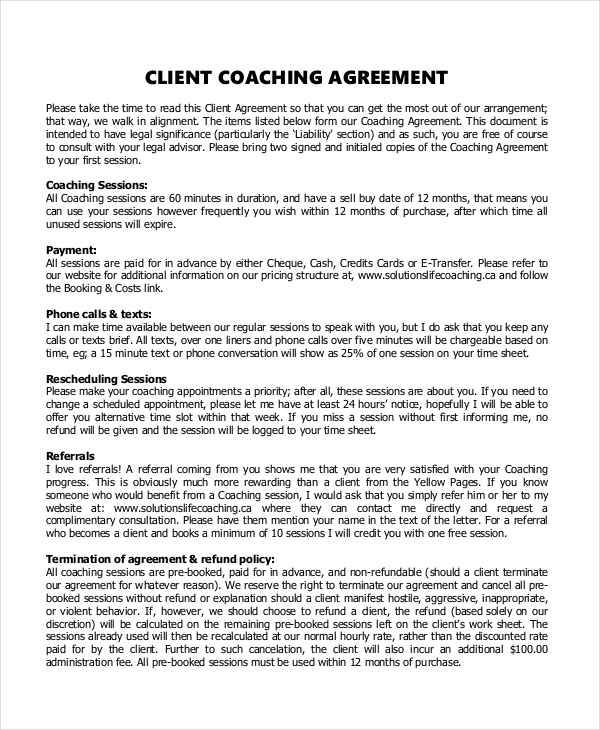 600×730 client coaching agreement template hq template documents from anthopofagos.blogspot.com
  474×613 excellent image coaching agreement form letterifyinfo from letterify.info